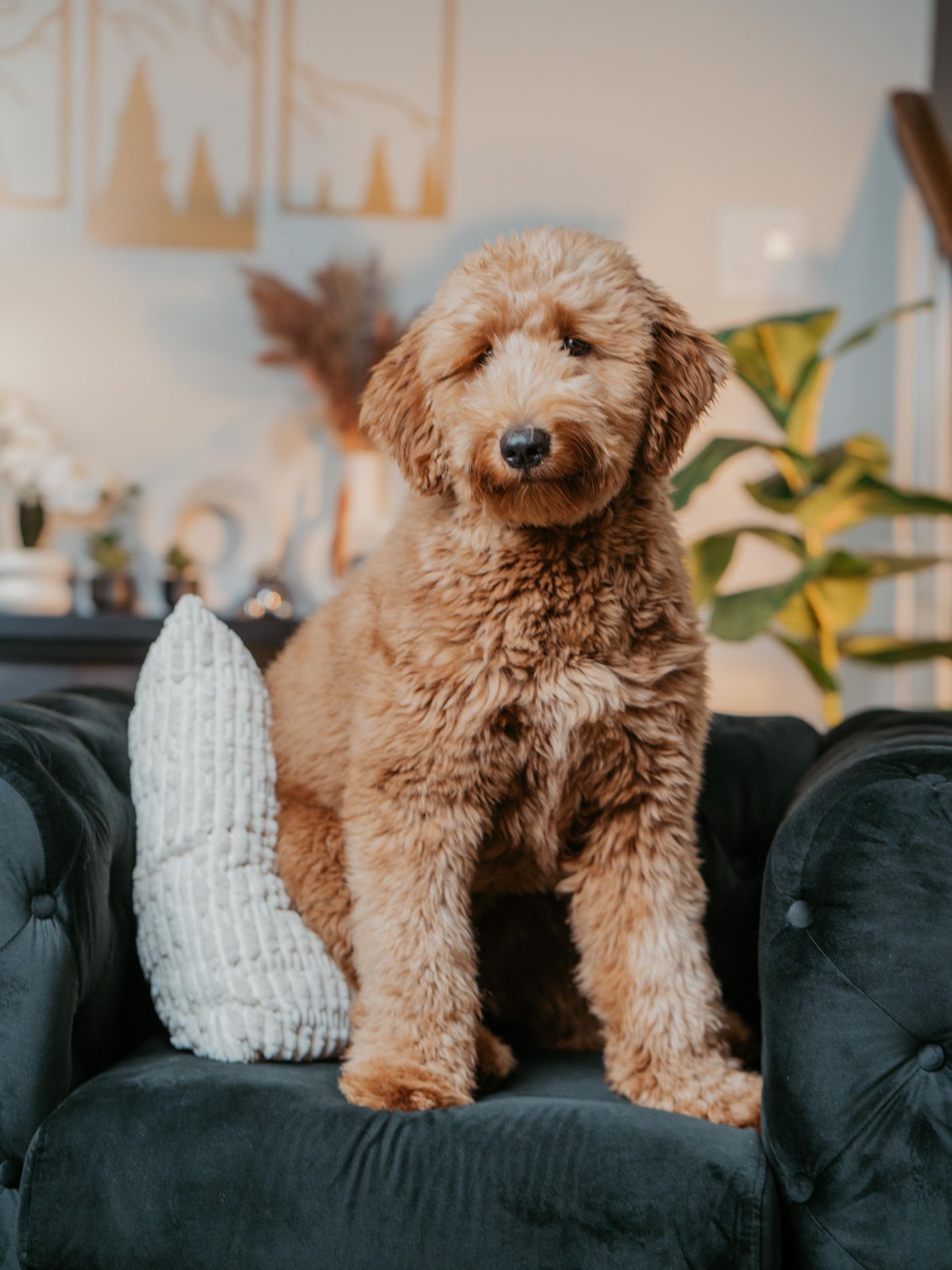
Living with a Goldendoodle
What day to day actually looks like, coat to bowl to vet visits.
What day to day actually looks like, coat to bowl to vet visits.
The everyday version
Goldendoodles are not a wash-and-go breed, but with a routine in place the coat stays manageable and the energy stays fun instead of exhausting.
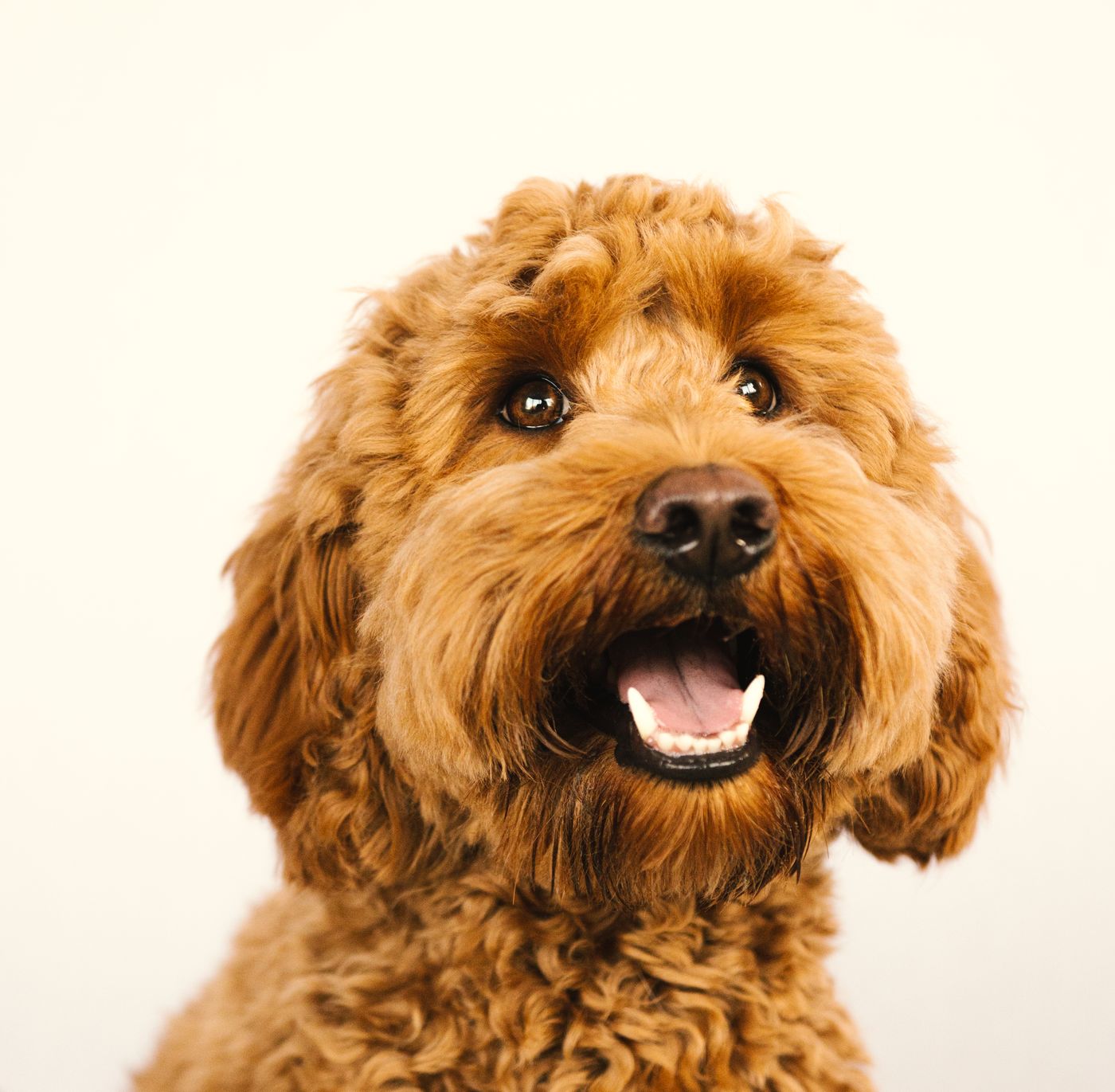
How much grooming a Goldendoodle needs depends on generation and coat type. Curlier, higher-Poodle coats need brushing three to four times a week to prevent mats and a professional trim every six to eight weeks. Looser, wavier coats shed more but need less brushing and fewer trims.
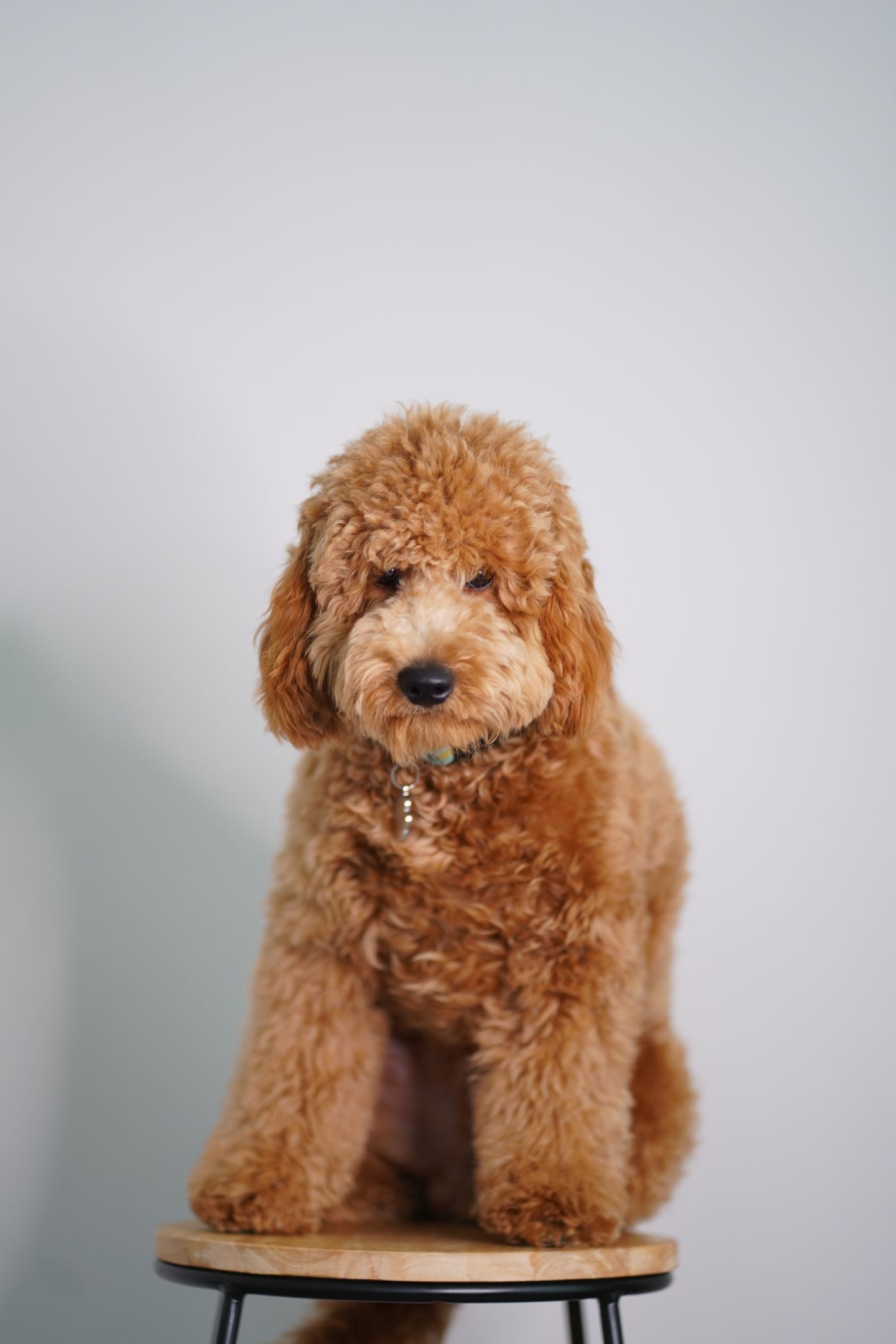
Goldendoodles inherit the Golden Retriever's activity level and the Poodle's sharp intelligence, which means they need both physical exercise and mental work. A bored, under-exercised Goldendoodle tends to get chewy and restless.
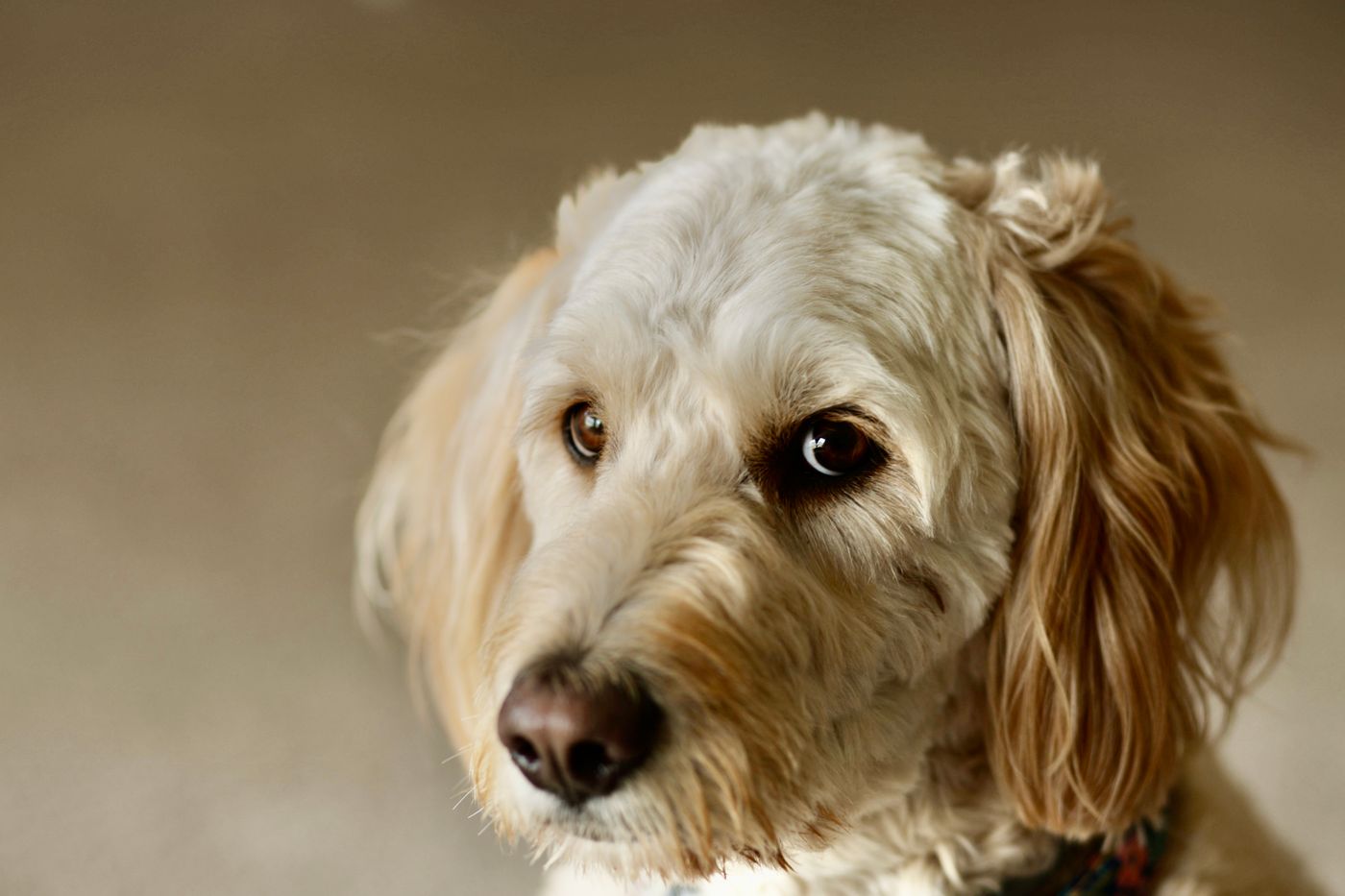
Sizes range from mini to medium to standard, and portions should scale to the specific dog rather than a generic Goldendoodle chart. Standards especially can be prone to weight gain as adults, so measured feeding matters more than the food brand. Not sure which size you're planning for? See our mini vs standard size guide for real weight ranges and growth timelines.
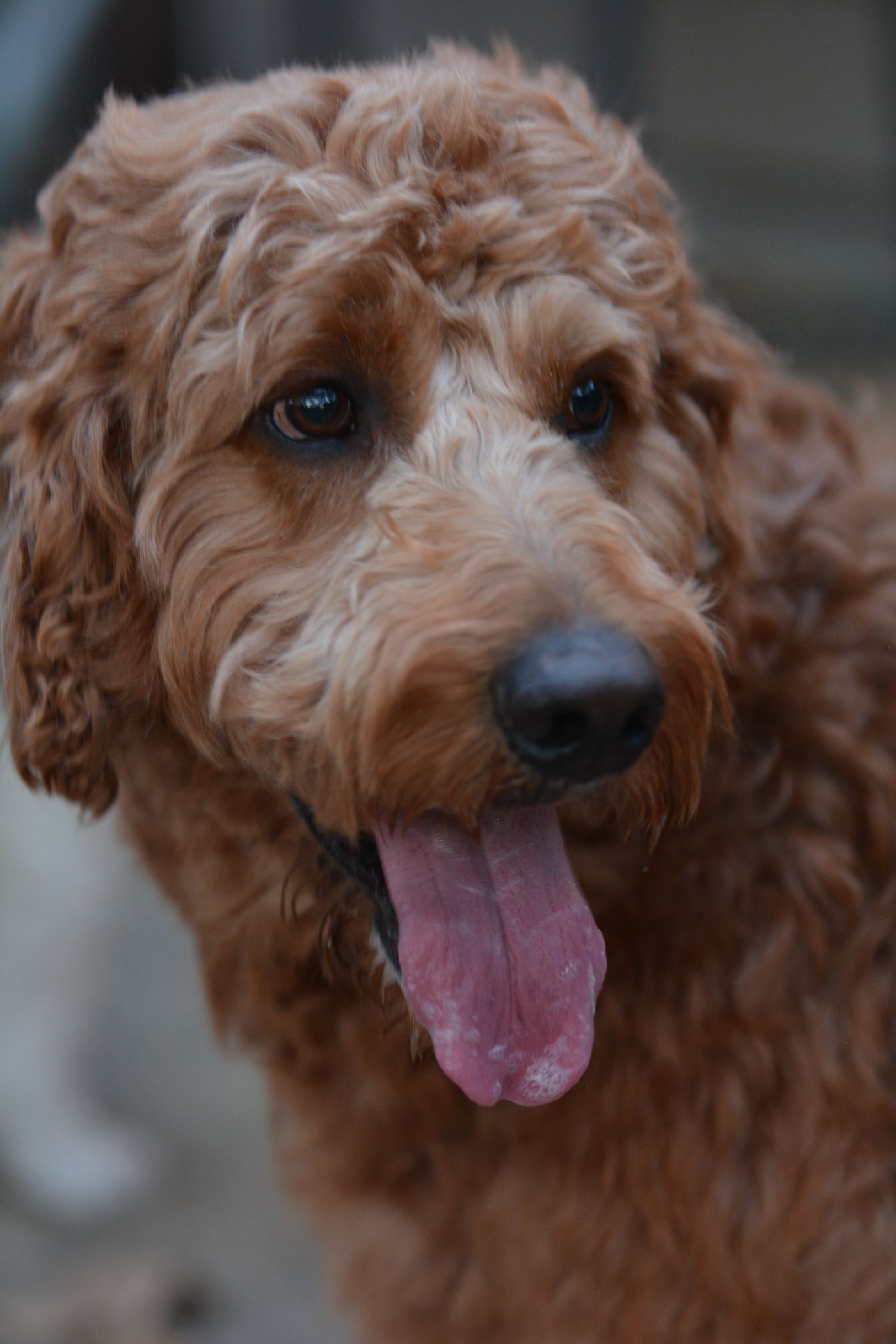
Beyond standard vaccinations and annual exams, ask your vet about periodic hip, elbow, and eye checks given the breed's inherited risk from both parent breeds, even if the parents tested clear. Ear infections are also more common in dogs with floppy, hair-covered ears, so regular ear checks matter.
Learn what to verify in a Goldendoodle breeder, then a home like yours.
About the breed